

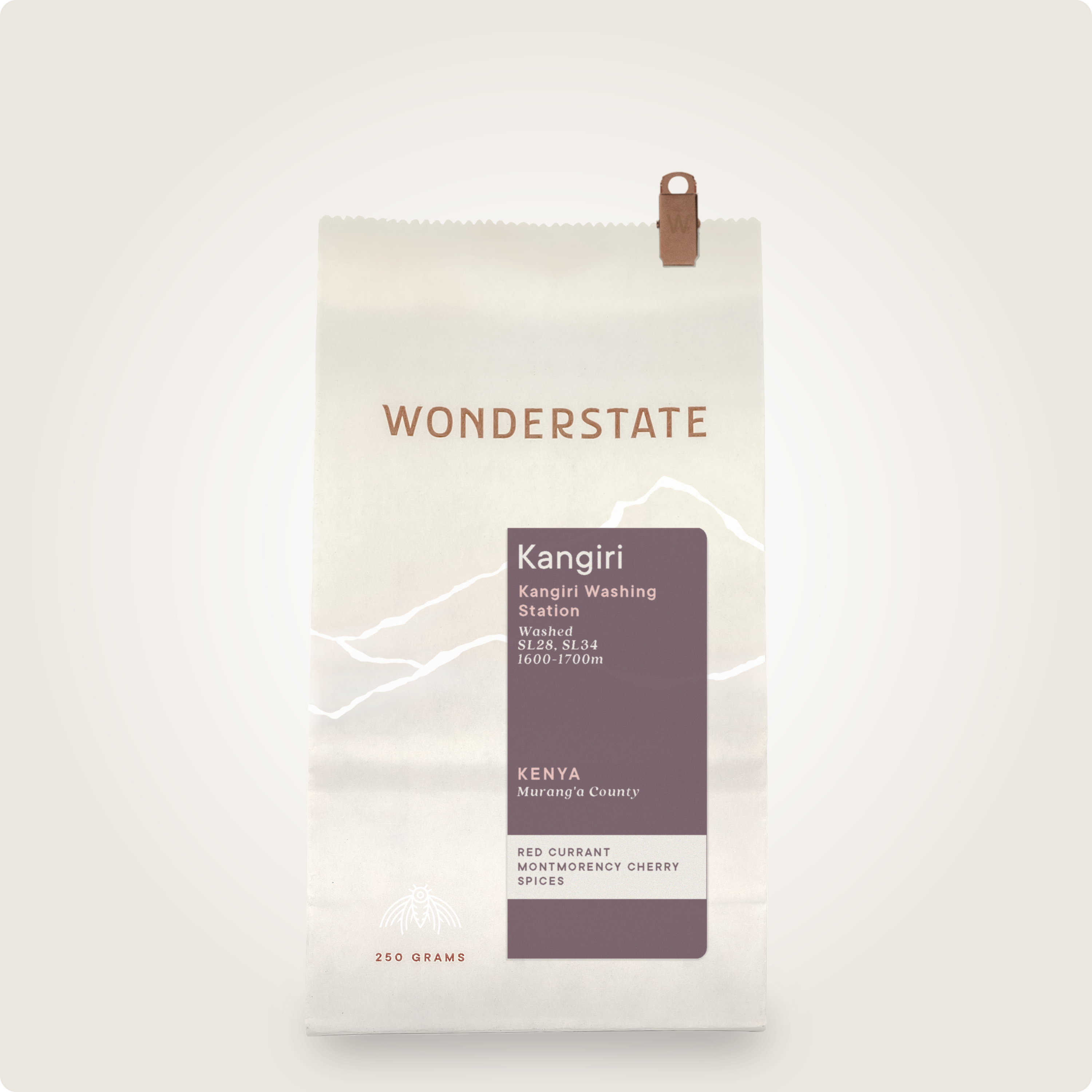
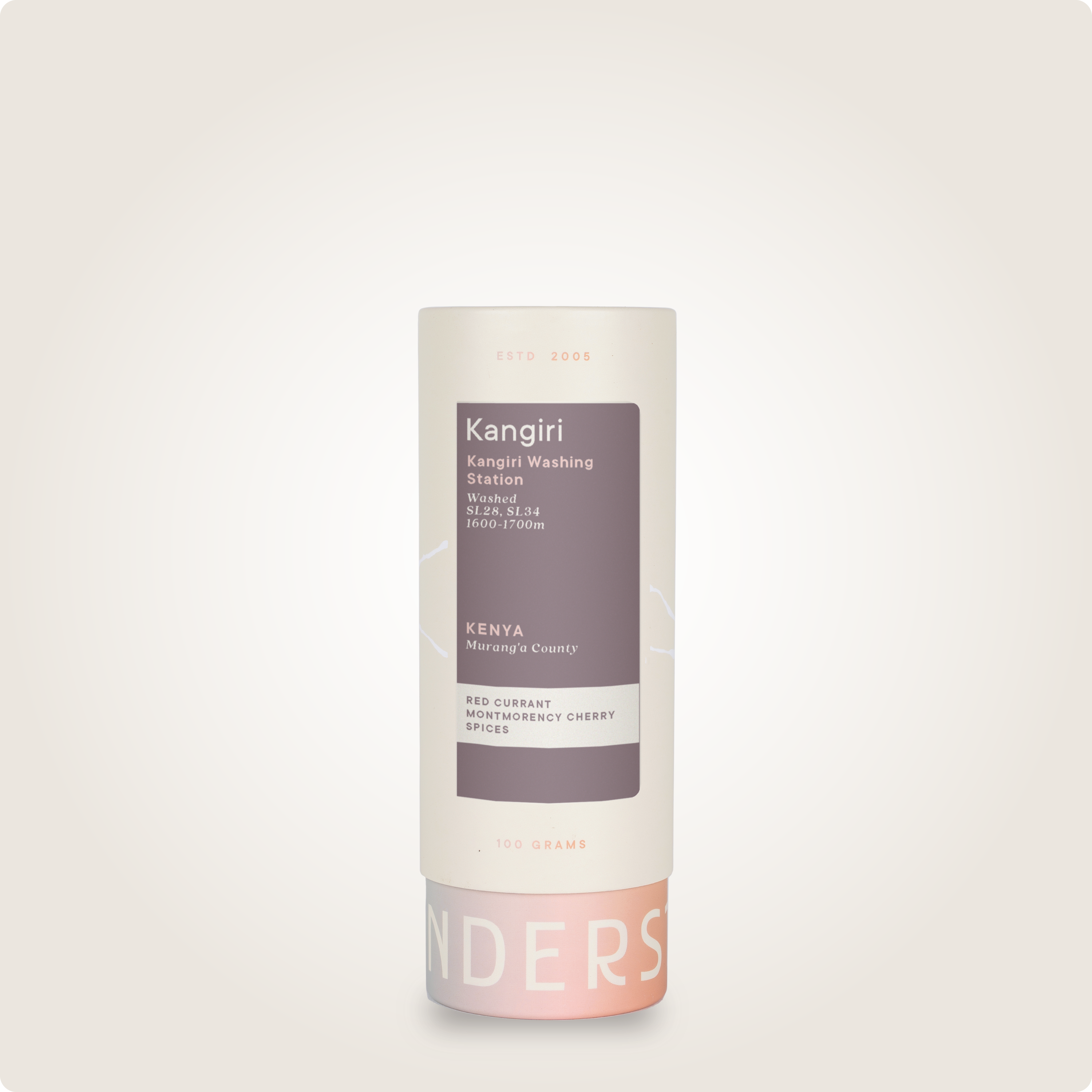


Kenya Kangiri
Process: Washed
Notes of Red Currant, Montmorency Cherry & Spices
Bright acidity of red currant and aromatic montmorency cherry are complimented by a long spiced and hibiscus finish.
Available in whole bean only.
Specs
Altitude: 1600-1700 meters
Varietals: SL28, SL34
Process:
Coffee cherries are sorted by hand and then depulped, left to ferment without water for 24-36 hours before being soaked for another 24 hours. After fermentation, the coffee is graded by density through water channels and dried on raised beds.
Harvest: November - January 2025
Region: Murang'a County
About the Coffee
With nearly six hundred fifty farmer members delivering cherries, the Kangiri Washing Station must carefully manage separation, blending, and lot building across dozens of daily deliveries. This year’s standout selection was created from a small group of farmers cultivating SL28 and SL34. These varieties, which share lineage with Bourbon and Typica, were developed by Scott Agricultural Laboratories in the nineteen thirties and nineteen forties and quickly became synonymous with Kenyan excellence. Although hybrids have since been promoted across many regions in the country, their flavor diverges from the clarity and intensity that SL varieties consistently deliver. By continuing to support and preserve these heirloom cultivars, Kangiri remains committed to the genuine character of Kenyan coffee.
It is also important to highlight that the farmers who delivered cherries to the Kangiri Washing Station received prices that were significantly higher than the local market rate during harvest. This outcome was possible through agreements between Kangiri, Peter Mbature of Kamavindi, and committed buyers like Wonderstate Coffee. Exceptional coffees require exceptional effort. From the selection of ripe cherry to the slow and careful processing, that work deserves to be matched with the best prices available.
This coffee was processed using the traditional Kenyan double fermentation method. Coffee cherries are sorted by hand and then depulped, left to ferment without water for 24-36 hours before being soaked for another 24 hours. After fermentation, the coffee is graded by density through water channels and dried on raised beds.
In Kenya, AB refers to bean size, specifically a medium screen size used in grading. Kenyan coffee is typically classified into a few main grades:
- AA — the largest beans, often prized for their syrupy texture and intensity in the cup.
- AB — mid-sized beans, still capable of excellent quality.
- PB (Peaberry) — naturally occurring single beans, often showing concentrated acidity and sweetness.
- C — smaller seeds, though still capable of capturing distinctive profiles.
While quality is not determined solely by size, exceptional coffees can be found across all grades. Historically, AB lots were preferred less by buyers than AA selections, but we’ve found AB coffees to be incredibly sweet and nuanced, less overtly savory and more fruity than some AA selections.
About the Producer
There was a time when Kenya was considered the crown jewel of specialty coffee. For buyers chasing acidity and fruit, it was the place to go. Blackcurrant, pink grapefruit, and blackberry profiles defined entire seasons, and people returned year after year in search of more. In recent decades, though, these coffees have become harder to find. Climate change, shifting rainfall patterns, the introduction of hybrid varieties, and changes in post-harvest practices have all contributed to that decline. As other origins pushed forward with innovation and reinvestment, Kenya risked slipping quietly into the background.
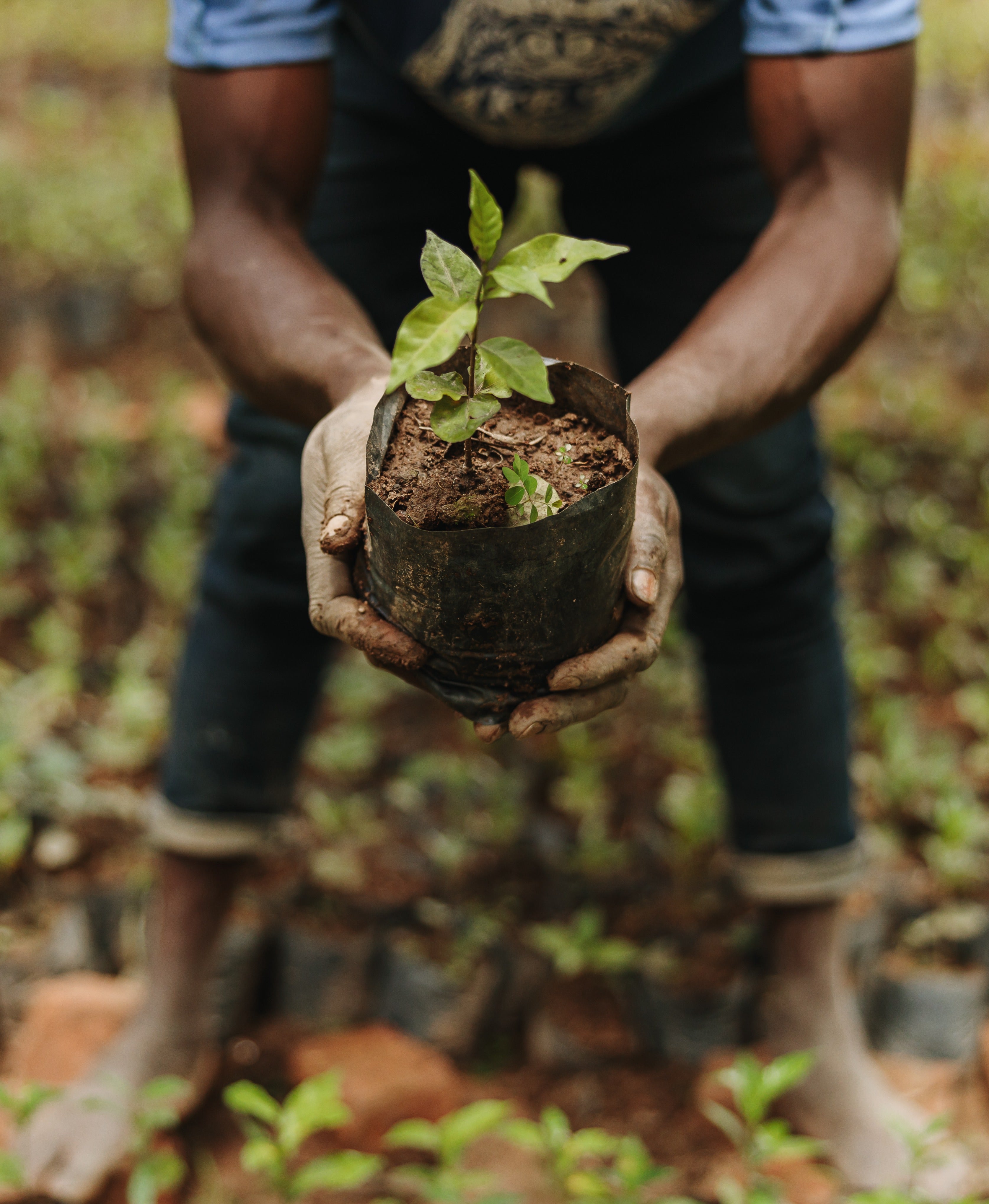
This selection from the Kangiri Washing Station is proof that the brilliance of Kenya is still very much alive when dedication, investment, and vision meet in the right hands. Kangiri is one of the many sites where farmers deliver and process their coffee, and it operates within the larger Kangiri Farmers Cooperative Society. Like many cooperatives throughout Kenya, Kangiri has faced considerable challenges. Climate volatility, aging trees, and years of low prices have made it difficult for farmers to keep investing in their land. Exceptional quality is possible in Kenya, but it only happens when farmers are rewarded for their work and given pathways to thrive.
This season, Kangiri partnered closely with our friend and ally Peter Mbature to craft a lot that brings forward the clearest expression of what Kenya can be. The team separated SL28 and SL34 varieties, picked only the ripest cherries, extended the fermentation, and dried the coffee slowly under constant attention. These steps resulted in a cup that shines with layered acidity and deep sweetness, both bright and syrupy at the same time. Expect something remarkable, demanding, and unforgettable. It is a singular representation of what Kenyan coffee can achieve when everything aligns.
Why We Love It
Kenyan coffee is finding new momentum again, and much of that revival is happening because of innovators like Peter Mbature. Through steady support, shared training, and a clear-eyed commitment to quality, Peter is helping cooperatives like Kangiri produce coffees that capture the unmistakable essence of Kenya.
This separation of SL28 and SL34 delivers a dense and direct red fruit profile that calls to mind Red Currant and tangy Montmorency Cherry. The cup finishes with aromatic spice and a touch of vibrant hibiscus tea, delivering an experience that reminds us that Kenya still produces coffees with authentic character and distinctiveness.